
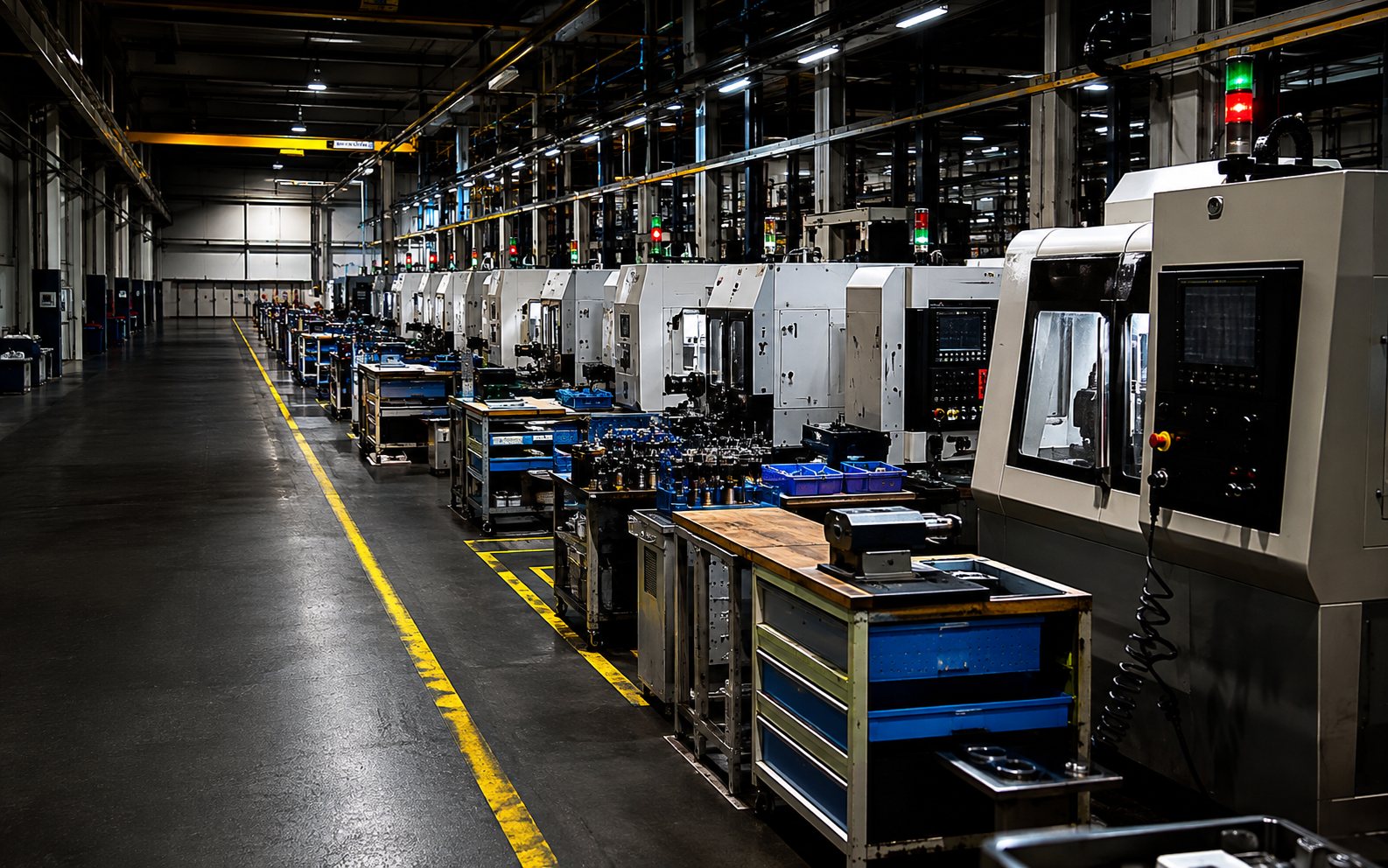
Production scheduling cut setups by 70% and delays by 78%
The challenge
The order in which jobs enter the line determines how many tool changeovers the plant makes and how many deliveries run late. It is a decision made every week, under pressure, balancing promised due dates, resource availability and sequencing constraints that only the people running the operation know.
Done manually, scheduling took about two weeks of work and reached only a short horizon. The plan was out of date the moment it was finished: any change in orders or capacity meant redoing much of the reasoning, and the result depended on who was scheduling at the time.
The approach
Orion modeled scheduling as an optimization problem with 18 input parameters, covering deliveries, due dates and resources, spanning a space of roughly 27 million possible sequences.
The model now generates the line schedule three months ahead in about an hour, with the operation's rules built into the formulation. Beyond the time savings, the result no longer varies with the scheduler: the same input produces the same plan, and alternative scenarios can be compared before the line stops.
A strategic diagnostic,
in 45 minutes.
A structured conversation with Orion's leadership to understand where your operation gains the most from optimization applied to decision-making, and which level of customization makes the most sense: a ready-made solution, a customizable solution or bespoke consulting.
Choose the most direct channel. We reply during business hours, Monday to Friday.